Quick Summary
Box trucks win on sheer volume and payload, which makes them the right call for furniture delivery, moving and palletized freight. Cargo vans cost less to buy, fuel and insure, fit in regular parking spots and garages, and keep tools organized behind locking doors, so they suit most trades and local delivery work. Only vehicles rated at 26,001 pounds GVWR or more require a Class B commercial driver’s license, and most box trucks used by small businesses fall below that line. Our inventory changes often, so call (520) 750-0505 or check online for current work vans and trucks.
Say there’s a mattress store and an HVAC outfit on the same block over on Speedway, and one of them pulls up in a big white box on a truck chassis and the other one in a high-roof van, and honestly they both picked right, because the whole cargo van vs box truck thing basically comes down to what you haul, how far you go, who’s driving and what you want to spend every month on gas and upkeep.
Folks who come in to talk work vehicles ask us the same handful of questions a lot of times, so here are the seven that come up most, from the license stuff to whether the thing fits in a downtown loading zone.
How a Box Truck and a Cargo Van Are Built
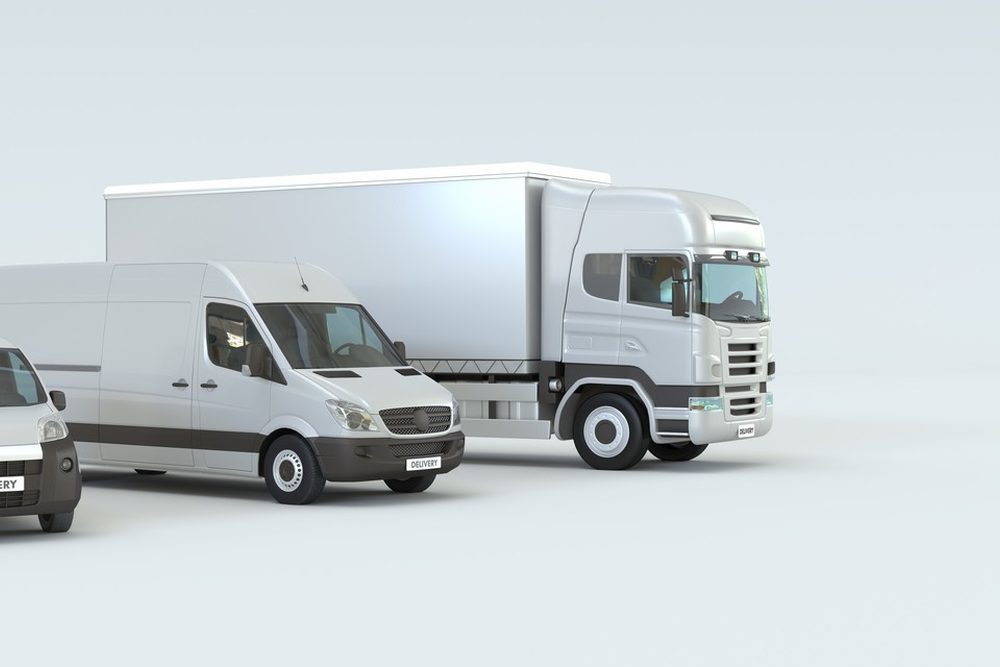
With a cargo van the cab and the back are all one shell, so on most of them you can climb out of the driver’s seat and duck back to your shelves, and around here it’s mostly Ford Transits, Ram ProMasters, Chevy Expresses and the odd Mercedes-Benz Sprinter.
A box truck (you’ll hear straight truck or cube truck too) is a regular truck cab with a separate rectangular box bolted on the frame behind it, and the boxes run from about 10 feet up to 26 feet long, usually with a roll-up or swing door in back and sometimes a hydraulic liftgate.
7 Key Differences Between Cargo Vans and Box Trucks
So here’s how they stack up, more or less in the order people ask.
1. Cargo Space
It’s not even close on this one, the biggest 26-foot boxes hold well over 1,500 cubic feet, and the tallest, longest van you can buy only gets you a fraction of that, something like 400 to 500-plus cubic feet in an extended high-roof.
The box has straight walls too, so stacking furniture, appliances and pallets is way easier than in a van, where the walls kind of curve in toward the roof.
2. Payload and Weight Ratings
Box trucks are built on heavier chassis, so the gross vehicle weight rating (GVWR) can be anywhere from around 12,000 pounds up to 26,000, and a full-size van is more like 9,000 to 10,000 GVWR, which leaves you a payload in the low-to-mid thousands of pounds, depending on model and setup.
3. Licensing Requirements
Per the Federal Motor Carrier Safety Administration, it takes a Class B commercial driver’s license to drive a single vehicle with a GVWR of 26,001 pounds or more, and no cargo van is anywhere near that, and a lot of box trucks are rated just under it, so your regular Arizona license is usually fine for either.
That said, there’s other federal stuff that can kick in over 10,000 pounds GVWR if you’re doing interstate commerce, like a USDOT number and a medical card for the driver, so we’d check with FMCSA and the Arizona MVD before you put a heavier truck to work.
4. Fuel Economy
Smaller engine, less weight, more slippery shape, so yeah, a van is going to beat a box truck on gas pretty much every time, since the box is basically pushing a flat wall of air down the road, and on a 150-mile-a-day route around Pima County that adds up to real money by December.
5. Maneuverability and Parking
Most vans drive about like a big SUV and plenty fit a normal parking space or even some covered garages, but with a box truck you’re swinging wide on turns, needing more room to back up, and watching overhead clearance at every drive-through, bank canopy and parking garage.
6. Purchase and Operating Costs
Vans are usually cheaper to buy, insure and keep running, and there are a ton of affordable used ones out there, while box trucks cost more up front and have heavier-duty tires, brakes and suspension parts that aren’t cheap to replace.
7. Loading and Cargo Access
A van’s got the sliding side door plus the rear doors, so a tech can reach in from the curb and grab a part, but a box truck mostly loads from the back and the deck sits higher, so you end up using a ramp or a dock or a liftgate pretty much every day.
Cargo Van vs Box Truck: Which Fits Your Business
If you usually haul bulky stuff or pallets, like furniture, appliances, event gear or somebody’s whole household, go with the box truck, and if it’s tools and parts with a lot of stops in neighborhoods, or you want any employee with a regular license driving it, the van’s the one.
Plenty of trades end up deciding a pickup with a bed cap or utility body does the job fine though, especially if there’s towing or loose material involved.
Get Your Next Work Vehicle at Car Time Supercenter
We’re family-owned, we’ve been Tucson’s trusted used car dealership since 1984, and everything we sell is inspected and guaranteed to meet Arizona emissions standards, but just so you know, our inventory changes all the time, so call (520) 750-0505 or browse our used cars for sale in Tucson, AZ and our used trucks in Tucson.
Once you’re ready to talk numbers we can help you get pre-qualified for financing, and our programs include $499 down with no payments for up to 120 days, so stop by on Oracle Road or call and we’ll help match a vehicle to your workload.
Frequently Asked Questions
Only if it’s rated 26,001 pounds GVWR or more, that’s the federal Class B line, and a lot of the box trucks small businesses and folks moving use are rated at or under 26,000, so a regular license usually does it, though hazmat placards and a few other special uses change things.
For parcels and parts and a bunch of stops in neighborhoods we’d go van pretty much every time, it parks easier, it’s cheaper on gas and the driver can grab stuff through the side door, but if it’s furniture or appliances or pallets, yeah, get the box.
The van, in most cases, it’s cheaper to buy and fuel and insure and keep up, and a box truck has heavier parts and drinks more gas, though to be fair it also hauls a whole lot more per trip.
Yep, our car financing programs work for trucks and vans too when we’ve got them in, $499 down and no payments for up to 120 days, just call (520) 750-0505 first since our inventory changes often.

There are good reasons people will buy their next used car in Tucson from Car Time Supercenter. But I think we are one of the most trusted used car dealerships mainly because we treat everyone like family. My family has provided quality, dependable local used cars to Tucson customers since 1984, and I’m proud to be a part of our continued success.
Like many family-owned businesses, I grew up going to work with my dad. Falling in love with cars was natural because of my father’s passion, and eventually, I came to love the car business just like him. I officially joined the Car Time Supercenter team in 2012, starting in the finance department. Over the past decade, I’ve learned the used car business and how to treat customers from my family and industry resources.
Today, I oversee marketing, social media, inventory, and reconditioning, so I play an essential role in delivering local Tucson used car buyers the best experience possible. I also help our family business keep up with the times while providing old-fashioned customer service. From attending NADA classes to becoming Allstate certified for back-end products, I continue to learn and add skills to serve our customers better.